
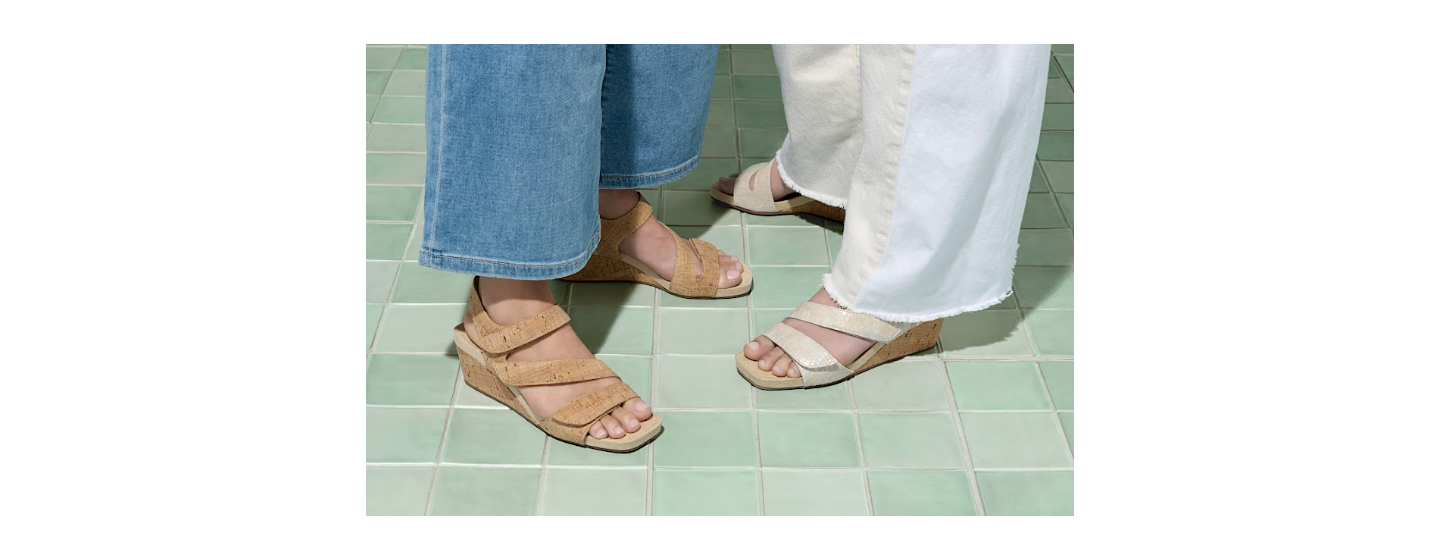
If your dress shoes hurt by the end of the day, the problem may not be heels — it may be fit. Many women wear shoes that are the correct length but the wrong width, leading to pressure, fatigue, and discomfort that worsen throughout the workday. The most comfortable dress shoes combine proper width sizing, supportive cushioning, and stable construction that keeps you comfortable from your morning commute to your last meeting. Whether you prefer pumps, loafers, flats, or mules, today's comfort-focused styles deliver professional polish without the sacrifice.
Let's be honest: for a long time, "comfortable work shoes" was a compromise. You either wore the shoes that looked great and paid for it by 3 p.m., or you wore the shoes that felt great and hoped no one looked at your feet during the presentation.
That trade-off is officially over.
Today's comfort footwear has quietly caught up to fashion — and in many cases, lapped it. The best dress shoes for work now combine genuine all-day support with styles that look completely at home in a boardroom, a client meeting, or a long day on your feet. You just have to know what to look for.
Why So Many Work Shoes Are Uncomfortable (And Why It's Not Your Fault)
One of the most common things we hear from customers is, "I thought I needed a larger size." In reality, many women need a different width, not a longer shoe. Sizing up can create heel slippage and instability while still leaving the forefoot feeling cramped.
Most mainstream shoe brands produce in a single standard width. But feet come in a range of widths — from narrow (AA) to wide (D, E) and extra wide (EE and beyond). A shoe that's the right length but the wrong width will squeeze, pinch, rub, and fatigue your foot regardless of how well it's constructed.
This is especially relevant for dress shoes, which tend to run narrower than casual styles. If you've ever bought a pair of heels or flats in your "correct" size and still found them uncomfortable, width is almost certainly part of the story.
What Actually Makes a Dress Shoe Comfortable for Work
Before we get to specific styles, here's what to look for in any work shoe you're considering:
Cushioned Footbed
The footbed is what stands between your foot and the ground all day. A flat, hard footbed (common in fashion-forward dress shoes) transmits every impact directly to your foot. Look for memory foam, EVA foam, or contoured cushioning that absorbs shock and supports your arch.
Correct Width Fit
A properly fitted dress shoe should feel secure through the heel and midfoot while allowing your toes to lie naturally without pressure. If you immediately want to take your shoes off at the end of the day, width — not length — is often the culprit.
Stable, Supportive Heel
A low block heel (1–2 inches) or wedge distributes your weight far more evenly than a thin stiletto. That means less pressure on the ball of your foot and less fatigue over the course of a full workday.
Flexible Outsole
Rigid soles force your foot to work harder with every step. A slightly flexible outsole moves with your foot's natural gait, reducing muscle fatigue in your feet, calves, and lower back.
Breathable Lining
Feet that overheat swell — which makes any shoe feel tighter as the day goes on. Leather linings and moisture-wicking materials help regulate temperature and keep fit consistent throughout the day.
The Best Styles of Comfortable Dress Shoes for Work
Block-Heel Pumps
The block heel is the working woman's secret weapon. It gives you the height and polish of a classic pump with a stable base that won't have you wobbling by noon. Look for styles with a padded insole and a rounded or slightly almond toe — pointed toes look sleek but can compress the toes over a long day.
Best for: Meetings, presentations, office environments where you're on your feet intermittently throughout the day.
Loafers
The loafer has had a full fashion rehabilitation and is now completely at home in professional settings. Modern loafers in leather or polished materials pair well with trousers, skirts, and tailored dresses — and a well-cushioned loafer with a slight platform is genuinely comfortable for all-day wear.
Best for: Creative offices, business casual environments, days with a lot of walking or standing.
Low-Heel Mules
A mule in a neutral color (black, nude, cognac) reads as professional and polished while offering easy on-and-off convenience. Look for styles with a backless design that still has a snug fit — a mule that slips at the heel causes more foot strain than it saves.
Best for: Offices with a smart-casual dress code, client-facing roles, warmer months.
Pointed-Toe Flats
Yes, pointed-toe flats can be comfortable — if they're built correctly and fit your width. Look for styles where the point extends beyond the toe box (so your toes aren't actually being compressed into a point) and where the insole has real cushioning, not just a thin lining.
Best for: Long days on your feet, travel days, casual Fridays, environments where you need comfort without sacrificing polish.
Wedges
A wedge is arguably the most structurally sound dress shoe for work. The continuous sole eliminates the pressure differential between heel and ball of foot, distributing your weight evenly across the entire footbed. In a leather or suede finish, they look just as professional as a heeled pump.
Best for: All-day standing, outdoor events, warm-weather professional settings.
A Note on Break-In Time
The best dress shoes for work shouldn't require a painful break-in period. If a shoe is genuinely well-constructed and properly fitted, it should feel comfortable from the first wear — or very close to it. Significant discomfort from day one is a sign of poor fit or poor construction, not something to push through.
While quality leather will soften over time, a shoe shouldn't rely on a painful break-in process to become wearable. In our experience, shoes that feel excessively tight, pinch the toes, or rub the heel on day one rarely become truly comfortable through wear alone.
The Bottom Line
Comfortable dress shoes for work exist — and they don't look boring. The key is knowing what features to prioritize (width fit, cushioned footbed, stable heel) and choosing styles that are built for real wear, not just runway appearances.
At Marmi, every style is designed with fit-first thinking — which means you can shop by your actual width and find shoes that work as hard as you do.